Build, track, refine.
All in one place.
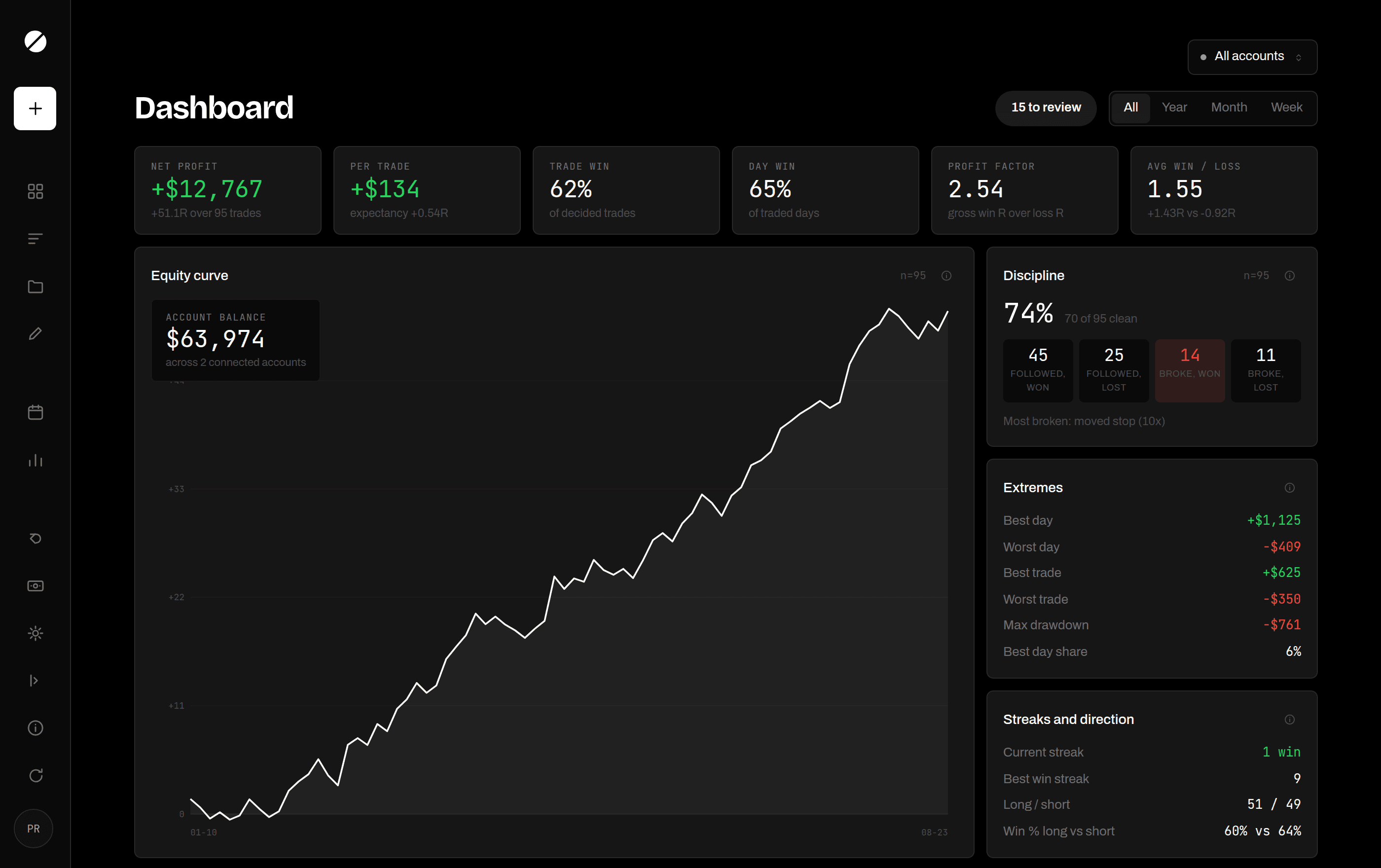
Most rule breaks happen after a loss. The size goes up, the stop moves, and nobody writes that one down. TradeLunar is a journal for futures traders that counts them per rule, so you can see how often it happens and what it has cost you in R.
Write the rules once. Log each trade after the session, or connect your platform and let the fills arrive on their own. Every figure comes with the number of trades behind it. $49, paid once.
- $49 once. No monthly fee. Nothing to cancel.
- Nothing here can place, change or cancel an order.
- Your trades and notes out as CSV whenever you want.
- No promises about your returns.
Four tools today. Two on the way.
One payment of $49 covers every tool in the app, now and later. There is no upgrade to buy. The prop firm is a separate business with its own prices, and the two that are not built yet say so on their cards.
Journal
Log each trade after the session: the setup, the prices you planned, the prices you got, and which of your rules you kept. Everything stays editable, and the stats grow from what you write.
See itPlaybook
Write your strategies down: the rules, the entry checklist, the exit checklist, and your daily routines. The review checks each trade against those rules, so adherence becomes a number you can watch.
See itBacktesting
Take the trades you already took and ask what a different exit would have paid. A fixed target, or moving your stop to breakeven. It runs on your own trades, so there is no market data to buy.
See itFills in
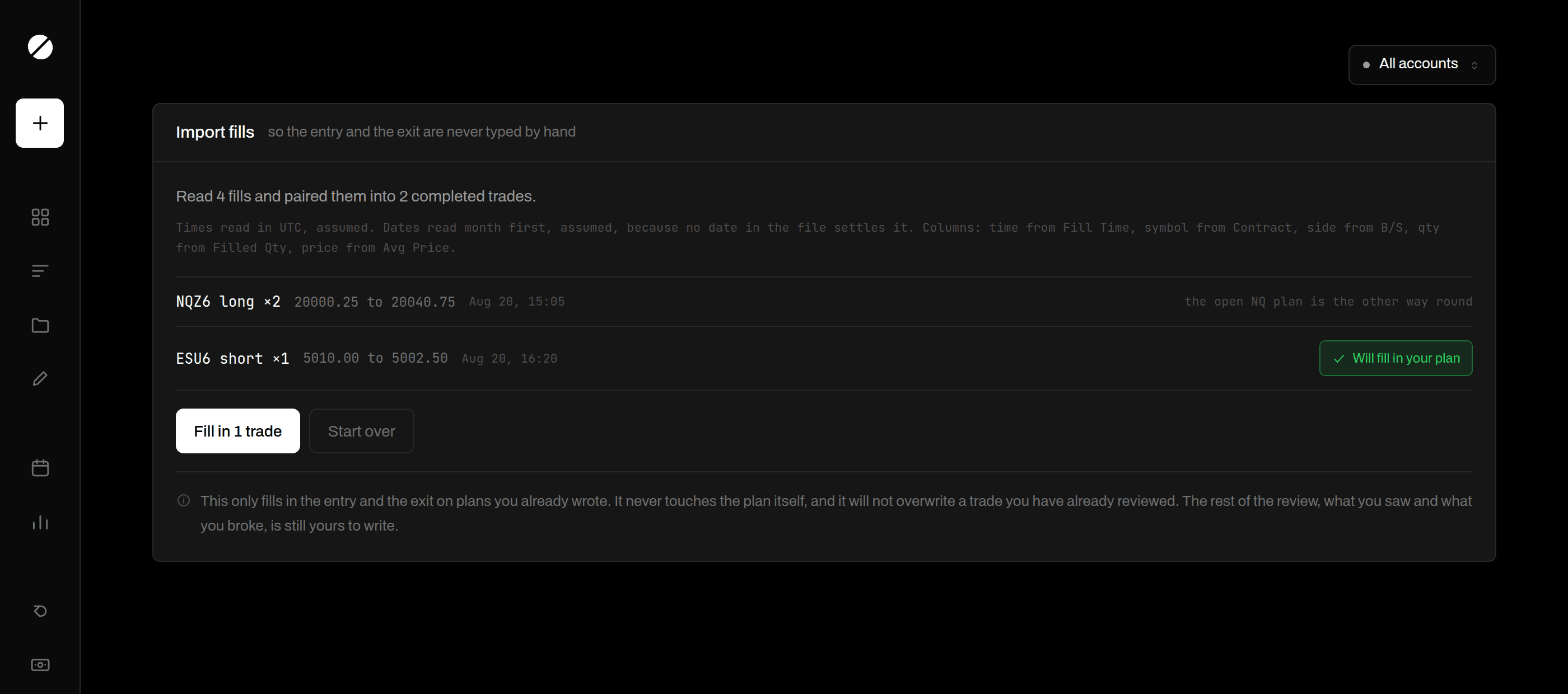
Connect Topstep, tastytrade, TradeStation or cTrader with a login you create at your platform, or drop in the CSV your platform exports. Entry and exit prices come from the platform's record, not your memory.
See itThe order copier
Not built yet, and included in the same $49 when it lands. Place one order and every funded account follows, sized per account rather than copied blindly. It routes live orders, so it ships tested or not at all.
Read about itThe prop firm
Not open yet, and a separate business with its own prices; you never need it to use any of this. Evaluations judged on the rules your journal already tracks, which no other firm can do, because no other firm is also the journal.
Read about it
A routine that survives a red day
- 01Once
Write your playbook
Your strategies, the rules you trade by, an entry checklist, an exit checklist, your routines. It takes an evening. Everything after this is measured against it.
- 02After the session
Log the trades
What you planned, where you really got in and out, how far it ran before it turned, and which of your rules you kept. A minute or two per trade. Connect your platform and the prices arrive on their own.
- 03Weekly
Read it back
Which rule broke most often, what it cost, and which setups are carrying the account. Sample size beside every figure. Change one thing, write it into the playbook, and check again next month.
I know my P&L. I could not tell you which setup it comes from, or which rule costs me the most.
Log the trade. The stats keep the count.
After the session you write each trade down: the setup, what you planned, what you got, which of your rules you kept. From that comes rule adherence over time, performance per setup, and the gap between planned and realised R. It reaches backwards too, so a trade you took last month can go in tonight.
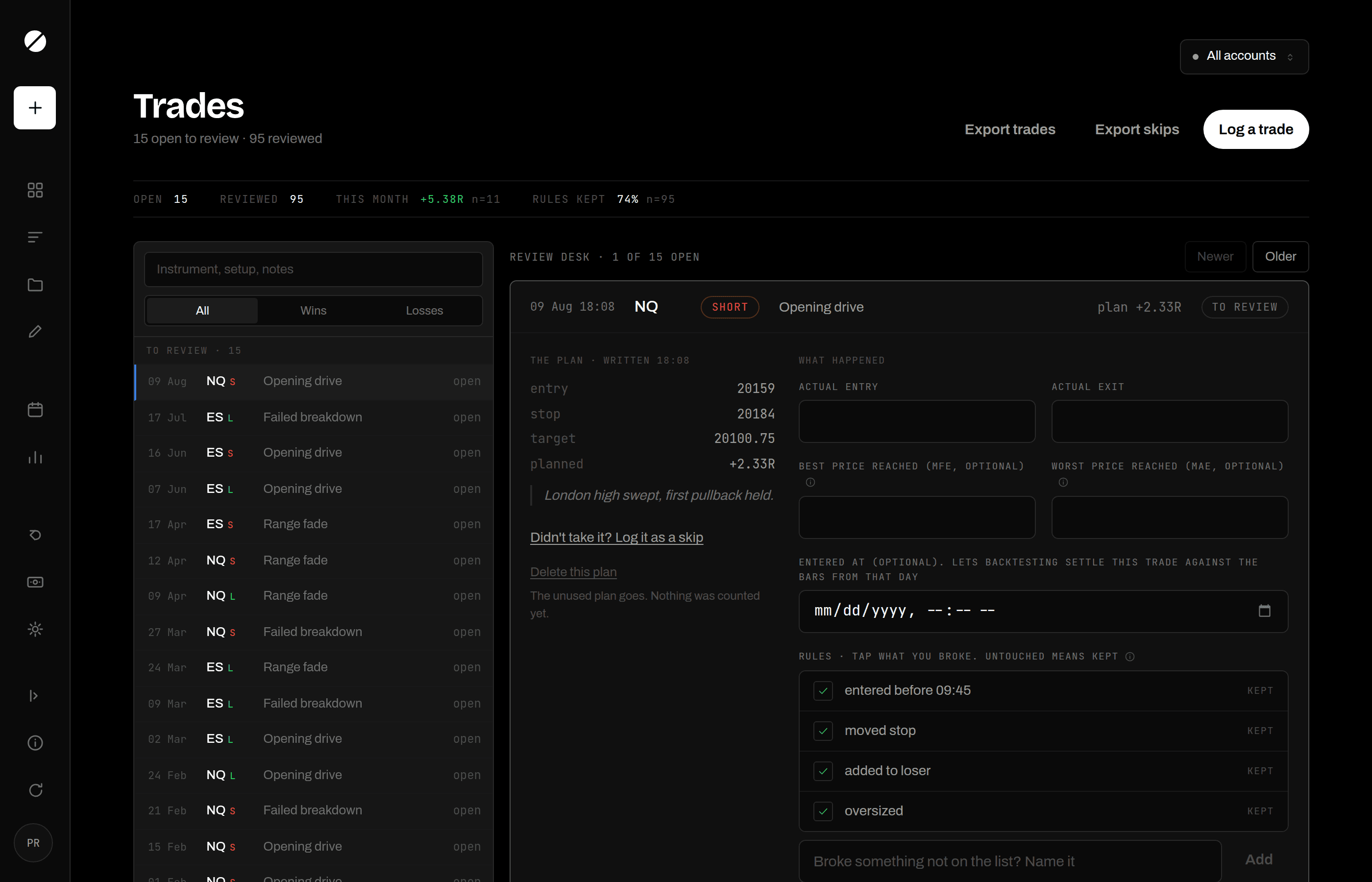
My strategy lives in my head, and in my head it renegotiates itself mid-trade.
Your playbook, measured
Each strategy gets written down once: the rules, an entry checklist, an exit checklist, your routines. Every review ticks them, so each rule carries how often you have broken it and each strategy shows what it pays per trade. Templates get a first playbook written in minutes, and every line stays yours to edit.
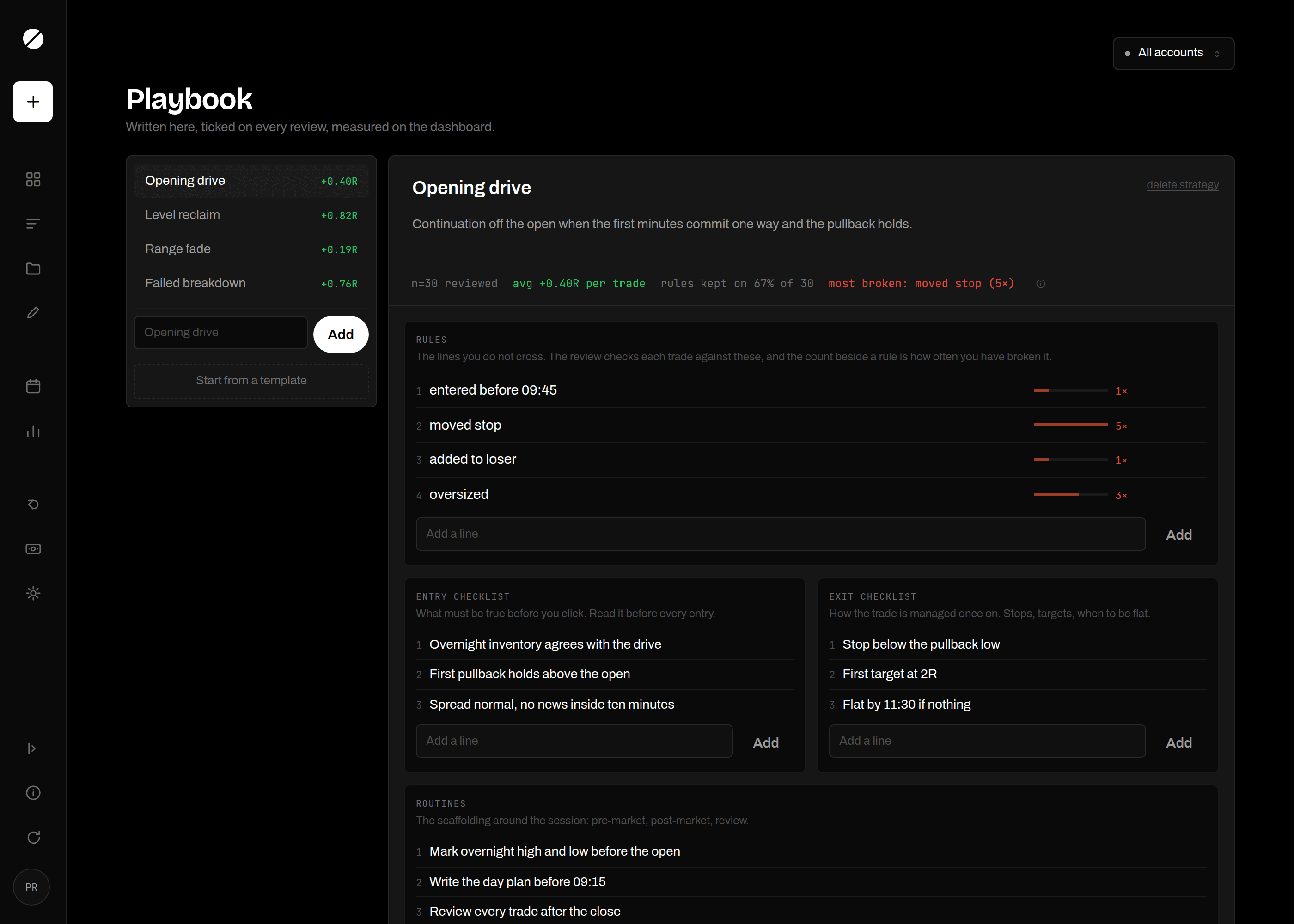
Your platform can tell you that you lost. It cannot tell you what you were thinking, and it does not keep count.
One losing trade, written down twice
The same trade, as your platform's history shows it and as TradeLunar records it. The difference is everything the stats are built from.
- Symbol
- NQ
- Side
- Short
- P&L
- -$250
- Time
- 09:52
A row in a table. By Thursday you will not remember which setup it was, let alone why you took it.
- Setup
- C tier level
- Planned R
- 2.5R
- Result
- -1.0R
- Rules kept
- 5 of 7
Took a C tier eleven minutes before CPI because I was down on the day. Third time this month.
The second record names the setup, what the plan implied, which rules broke, and that this is the third time this month. Rule adherence, per-setup performance and planned-versus-realised R are computed from records like it, and the counting is done for you.
I typed the entry from memory an hour after the close, and it was a bit better than the fill I actually got.
Your real prices, from your platform's own record
Memory rounds in your favour. So the prices come from the platform: connect Topstep, tastytrade, TradeStation or cTrader with a login you create there, and fills and balances sync on their own. Or drop in the file your platform already exports and it matches your buys to your sells. Every match is shown before anything is saved.
Some months are green because I traded well and some are green because I got away with it.
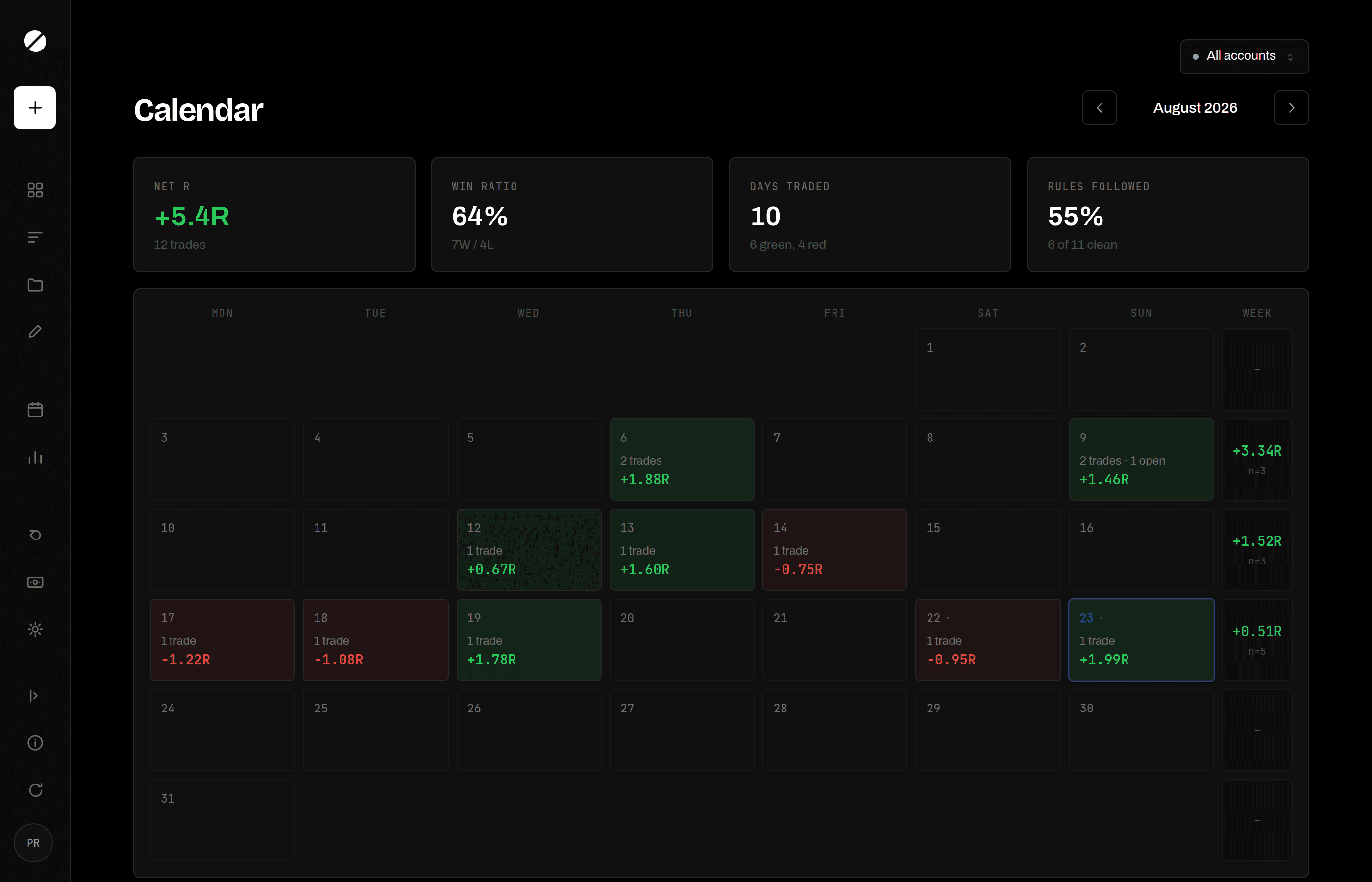
See the month you actually traded
Every traded day shaded by its result, darker on the bigger ones, with weekly totals down the side and the month across the top. Rules followed sits up there beside the money.
Connects to
Sync fills and balances with a login you create at your platform, revocable any time. More connections are on the way.




Everything else imports from the CSV your platform already exports, or gets logged by hand.
Tuesday's lesson is in a chat message, a screenshot folder, and half a memory.
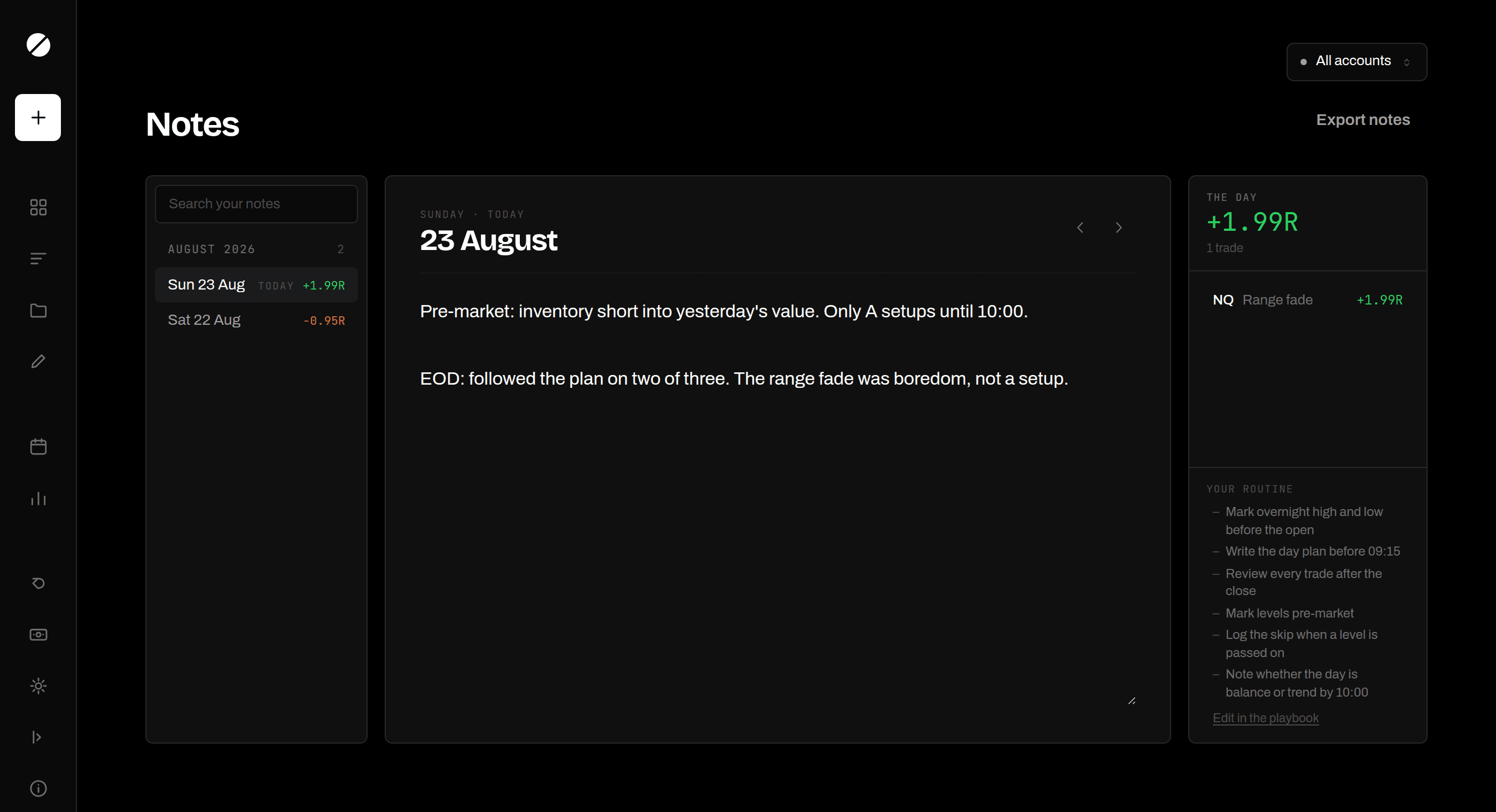
One page for each day
Your plan at the top, how it went underneath, and the day's trades and skips beside you while you write. It saves as you type. Days with a note are marked on the calendar, so you can find them again.
Here is the whole list. There is no second page.
Forty-nine dollars. Once.
You pay once and the app is yours. No monthly bill, nothing to cancel, and no tier above this one. Anything new we introduce is covered by the same payment.
What you get
- The trade log: what you planned, what you got, and which rules you kept, all editable, all counted.
- The playbook: your strategies, rules, entry and exit checklists and routines, written where the review can measure them.
- Platform connections (Topstep, tastytrade, TradeStation, cTrader) and CSV import, so prices come from the platform's record.
- Backtesting on your own trades: what a different exit would have paid. No market data, no key, no code.
- The dashboard, the calendar, daily notes, chart screenshots. Unlimited everything; there is nothing to run out of.
- Your data out as CSV any time, and deleted for good when you say so. Neither is ever held back.
- Everything we add to the app from here on, at no extra cost, with early access to new and beta features as they land.
$49paid once
Why once and not monthly
A monthly price charges you in the months you barely traded, and it pays us most when you forget to cancel. One payment is simpler for both of us. There is no renewal date, no tier above this one, and nothing you already have will move behind a second charge later.
Market data is not included
The backtesting you get today runs on your own trades, so it needs no price data at all. Testing over historical price bars is not built yet. When it is, you will buy that data yourself, in your own name, from a data company, at their price. We do not sell market data and we do not mark it up.
The order copier, which will send one order to all your funded accounts, is not built yet, and it is included in this payment when it lands. The TradeLunar prop firm is a separate business with its own prices, it is not open, and you never need it to use the journal.
What people ask
Anything this page does not answer is in the support centre, or one email to support@tradelunar.io.
Email support@tradelunar.io within 30 days, from the address on your account, and we refund the $49. You do not have to give a reason.